Oral Health Equity for Persons with Disabilities: What Patients in Bangalore Need to Know
Highgate Dental · 2026-10-29
Understanding Oral Health Barriers for Persons with Disabilities
In India and around the world, over 1.3 billion people live with disabilities, yet many still struggle to access appropriate oral health care. For patients and families residing in Bangalore—especially in bustling neighborhoods like BTM Layout—these barriers can deeply affect overall well-being. Research shows that oral health is not only about teeth: it influences comfort, eating, speaking, self-esteem, and the ability to participate fully in society.
The challenges are varied. Physical barriers may include dental clinics without ramps, wide doors, or accessible restrooms. Communication barriers can make it hard for patients with sensory, cognitive, or speech-related differences to understand or be understood. Information provided by dental staff may not be available in formats suited to everyone—such as Braille, large print, or simple language guidance. Financial constraints, along with a shortage of clinics ready to accommodate special needs, routinely stand in the way of care for persons with disabilities and their caregivers.
New WHO Guidance: An Opportunity for Change
Recognizing these persistent gaps, the World Health Organization (WHO) published a landmark policy brief in August 2026: "Oral health equity for persons with disabilities." This document urges countries—including India—to make oral care more accessible and inclusive. But what does this mean in practical terms?
WHO’s recommendations call on dental professionals, clinics, and policymakers to:
- Remove architectural barriers, making entrances, waiting rooms, and treatment spaces accessible for wheelchair users and others
- Train dentists and staff in disability awareness and clear, respectful communication
- Allow the presence of support persons, interpreters, or service animals during visits
- Share information in accessible formats (e.g., written materials in Braille or audio, visual aids)
- Collect and use disability-inclusive health data to improve service delivery and accountability
- Involve persons with disabilities—and their advocates—directly in decisions about care design and evaluation
These steps are aligned with the principle: “Nothing about us without us.” WHO highlights that real improvement happens when patients and caregivers help shape local services .
Practical Steps for Bangalore Patients and Caregivers
If you or your loved one has a disability, you should know that equitable oral health care is your right. Here’s how you can advocate for your needs:
- Ask Before You Book: Call the clinic and request information about accessible features. Do they have ramps, elevators, or accessible restrooms? Are staff trained in disability support?
- Prepare Communication: If you need support with communication, inform the clinic in advance. Bring a support person or interpreter if necessary.
- Feedback Matters: Share your experiences—positive or negative—with your dental team. Honest feedback helps clinics adapt and improve.
- Get Involved: Participate in local support groups or forums focused on disability rights. Collective voices are powerful in driving change at the community level.
- Stay Informed: Seek out dental practices that are committed to continuous learning and improvement in providing disability-inclusive care. Many are beginning to collect better data and adapt services following the latest WHO guidance .
Ongoing Challenges and Next Steps
Adopting these inclusive principles isn’t always straightforward. Not all dental clinics in Bangalore—or elsewhere—have yet adapted to meet every guideline. Funding, staff shortages, and limited disability-awareness training slow the rate of real-world change. Meanwhile, evidence on which interventions work best for people with different disabilities continues to grow but isn’t complete. As such, achieving full equity is an evolving process and may be gradual.
Despite these challenges, patients and caregivers remain central to progress. Advocacy can lead to more clinics viewing accessibility and inclusivity as non-negotiable. As the WHO policy brief makes clear, data collection—for instance, tracking how many patients with disabilities are served and how well they rate their care—will also be critical for holding the dental community accountable and measuring results. In the coming years, expect more dental teams in Bangalore and beyond to join this push for equity .
Conclusion
The landscape of oral health care for persons with disabilities is changing. Thanks to new global guidance and the persistent efforts of advocates, Bangalore’s patients can look forward to a future where oral care is more accessible, respectful, and empowering. While challenges remain, the first step is awareness—and using your voice to claim your right to equitable care.
For further information, consult the WHO’s policy brief on oral health equity for persons with disabilities and get involved in local initiatives that promote inclusive care.
Sources
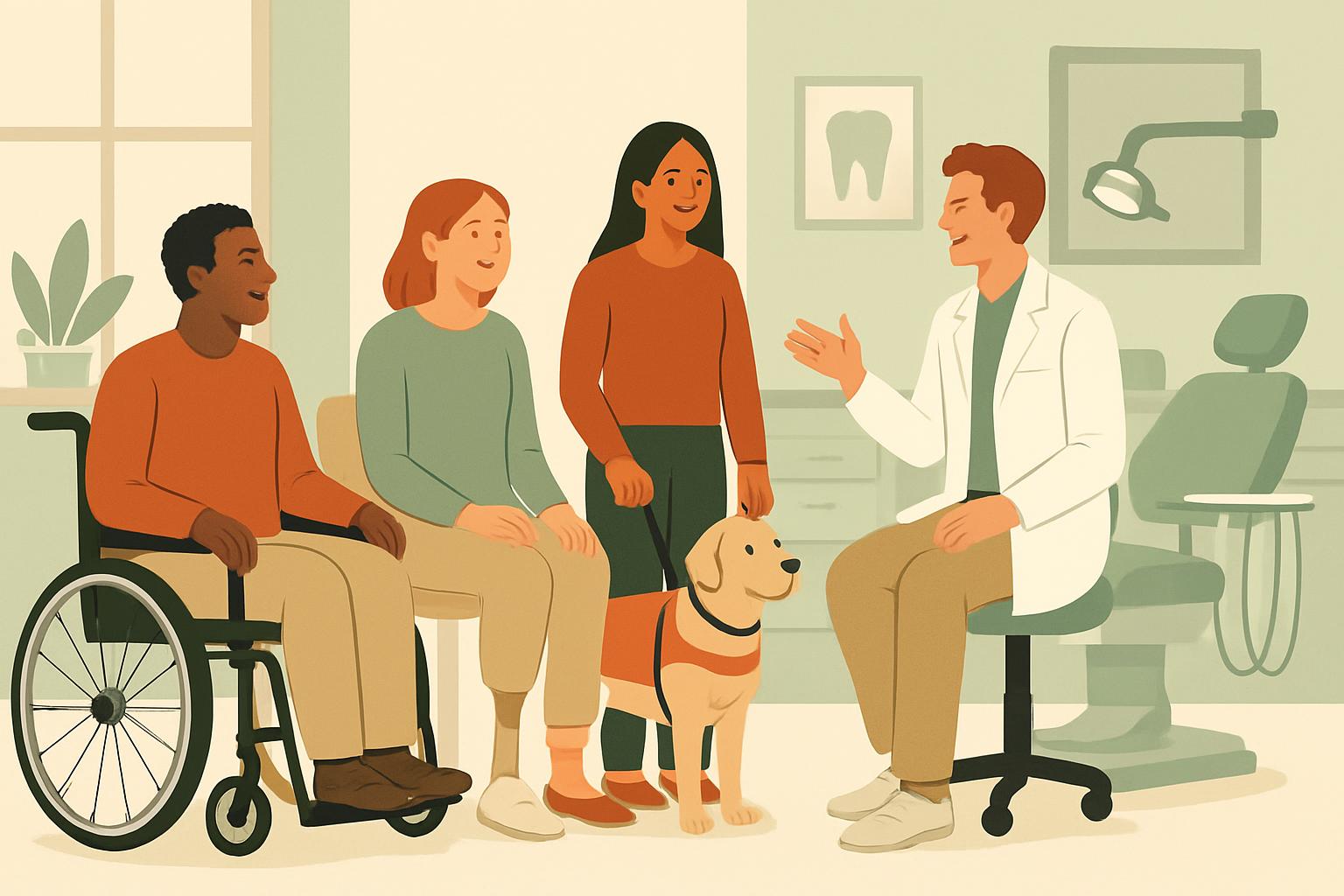
Image: Original AI-assisted illustration created for Highgate Dental. Adults with disabilities, including wheelchair users and a service dog, at an accessible dental clinic engaging with a dentist.
Educational information, not a diagnosis or individual treatment advice. Prepared with AI assistance; source links are provided above.
Book a dental consultation at Highgate · Find our Bilekahalli and Hulimavu clinics