What the New WHO Guidelines Mean for Mercury-Free and Minimally Invasive Dentistry
Highgate Dental · 2026-10-29
WHO’s New Approach to Oral Health Care
The World Health Organization (WHO) published its guideline on environmentally friendly and less invasive oral health care for dental caries in March 2026. This guidance urges clinics worldwide—including those in Bangalore’s Bilekahalli and Hulimavu—to move towards more sustainable and lower-impact dental practices.
The guideline calls for reducing dependence on mercury-based materials, such as traditional dental amalgam, and encourages the use of mercury-free alternatives. These changes reflect both environmental awareness and the broader shift toward global sustainability goals.
Why Mercury-Free Matters
Mercury-based amalgam fillings have long been a reliable option in dental care, but concerns about mercury’s environmental impact have prompted a reevaluation. The new WHO guideline outlines safer options, like composite resins and glass ionomer cements, which are effective without contributing to mercury pollution. Moving away from amalgam not only benefits the environment but aligns with best practices for universal oral health.
Less Invasive Dentistry: What’s Changing?
Alongside mercury-free recommendations, the WHO encourages minimal intervention dentistry for managing dental caries. These less invasive techniques focus on preserving healthy tooth structure and using preventive measures.
Examples of such approaches include sealants, fluoride varnishes, and improved oral hygiene instructions—even before decay reaches a stage where a filling would be required. Dental clinics committed to these protocols may favor preventive care visits and careful monitoring over more aggressive treatments for early tooth decay.
What This Means for Patients in Bangalore
For those living in growing communities like Bilekahalli or Hulimavu, this could mean more opportunities to access care that fits global health and environmental standards. Patients may notice a wider use of tooth-colored, mercury-free filling materials and greater emphasis on prevention. Dentists might offer sealants and fluoride as first-line tools, reducing the need for more extensive procedures where appropriate.
Current Limitations and Ongoing Research
It’s important to recognize that mercury-free materials and minimally invasive approaches are not universally ideal for all cases. Some situations still require other forms of care. The guideline provides recommendations, but implementation depends on local infrastructure and resources. Moreover, while environmental benefits are clear, ongoing research is needed to understand long-term performance and cost-effectiveness of newer materials.
Looking Ahead
With the new WHO guideline, dental practices in Bangalore and across the world are being encouraged to consider ecological impact alongside clinical effectiveness. Patients seeking care at progressive centers may see their oral health plans increasingly reflect these environmentally conscious, minimally invasive strategies, especially as dentists stay updated with international developments.
Sources
- WHO guideline on environmentally friendly and less invasive oral health care
- WHO calls for a global shift to environmentally friendly, less invasive and affordable oral health care
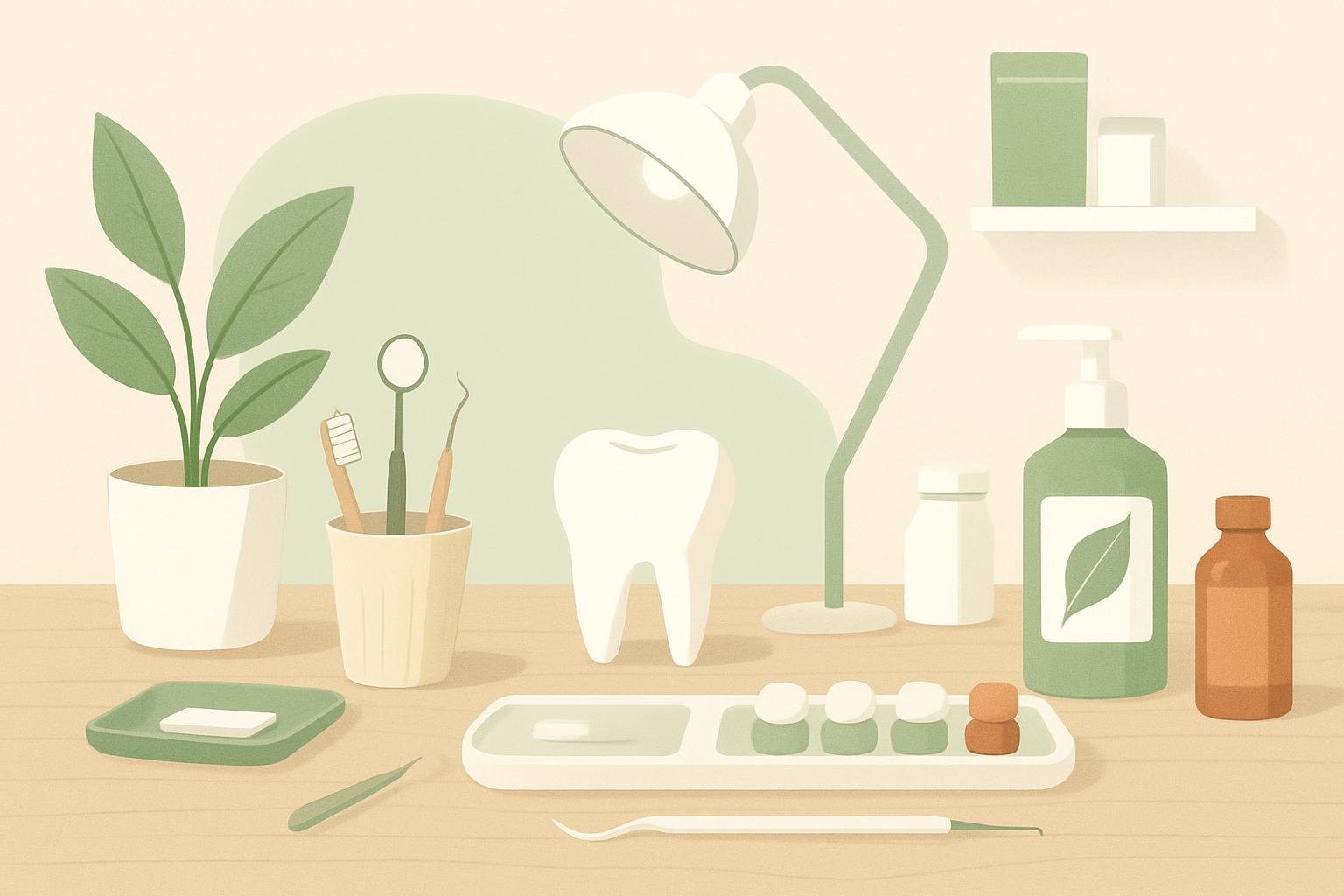
Image: Original AI-assisted illustration created for Highgate Dental. Eco-friendly dental materials in a modern dental setting, symbolizing sustainable and less invasive dentistry.
Educational information, not a diagnosis or individual treatment advice. Prepared with AI assistance; source links are provided above.
Book a dental consultation at Highgate · Find our Bilekahalli and Hulimavu clinics